An Ironman event is not just a test of cardiovascular fitness. It also challenges your posture, stability, flexibility, balance and muscular endurance over many hours of continuous movement.
Hours spent cycling can leave your hips tight and your lower back stiff. Swimming places repetitive demands on the shoulders, while running can expose weaknesses in the core, hips, and ankles.
Pilates addresses these issues by strengthening the muscles that support efficient movement, allowing you to maintain better technique even when fatigue sets in.
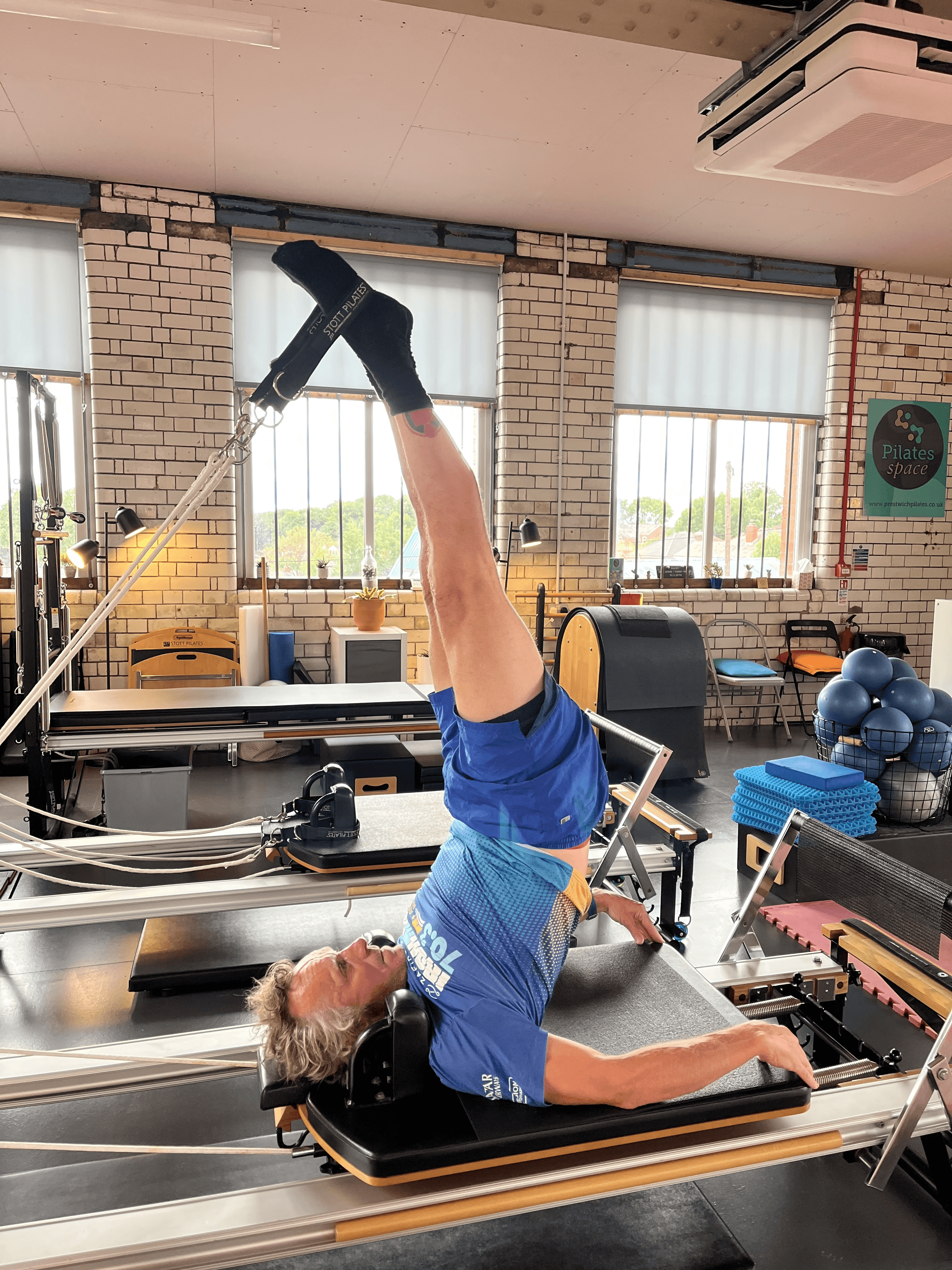
The Benefits of Pilates for Ironman Training
Improved Core Strength
Your core is much more than your abdominal muscles. It includes the deep stabilising muscles around your spine, pelvis and hips that provide a solid foundation for every stroke, pedal and stride.
A stronger core helps:
Maintain good posture on the bike
Improve power transfer during cycling
Increase stability while running
Support efficient swimming rotation
Reduce unnecessary energy loss
Better Swimming Technique
Swimming efficiently requires a stable body position and smooth rotation through the torso.
Pilates develops:
Shoulder stability
Thoracic spine mobility
Core control
Breathing awareness
These improvements can help you move through the water with greater efficiency while reducing fatigue.

More Efficient Cycling
Many cyclists experience tight hip flexors, rounded shoulders, tight neck muscles and lower back discomfort after long rides.
Pilates focuses on:
Hip mobility
Spine alignment and mobility
Glute activation
Pelvic stability
These elements help you maintain a stronger, more comfortable position on the bike for longer.
Stronger Running Form
As fatigue builds during the marathon, running technique often deteriorates.
Pilates helps improve:
Pelvic stability
Single-leg balance
Glute strength and hip extension
Running posture
Maintaining better alignment can improve running economy and reduce the risk of overuse injuries.
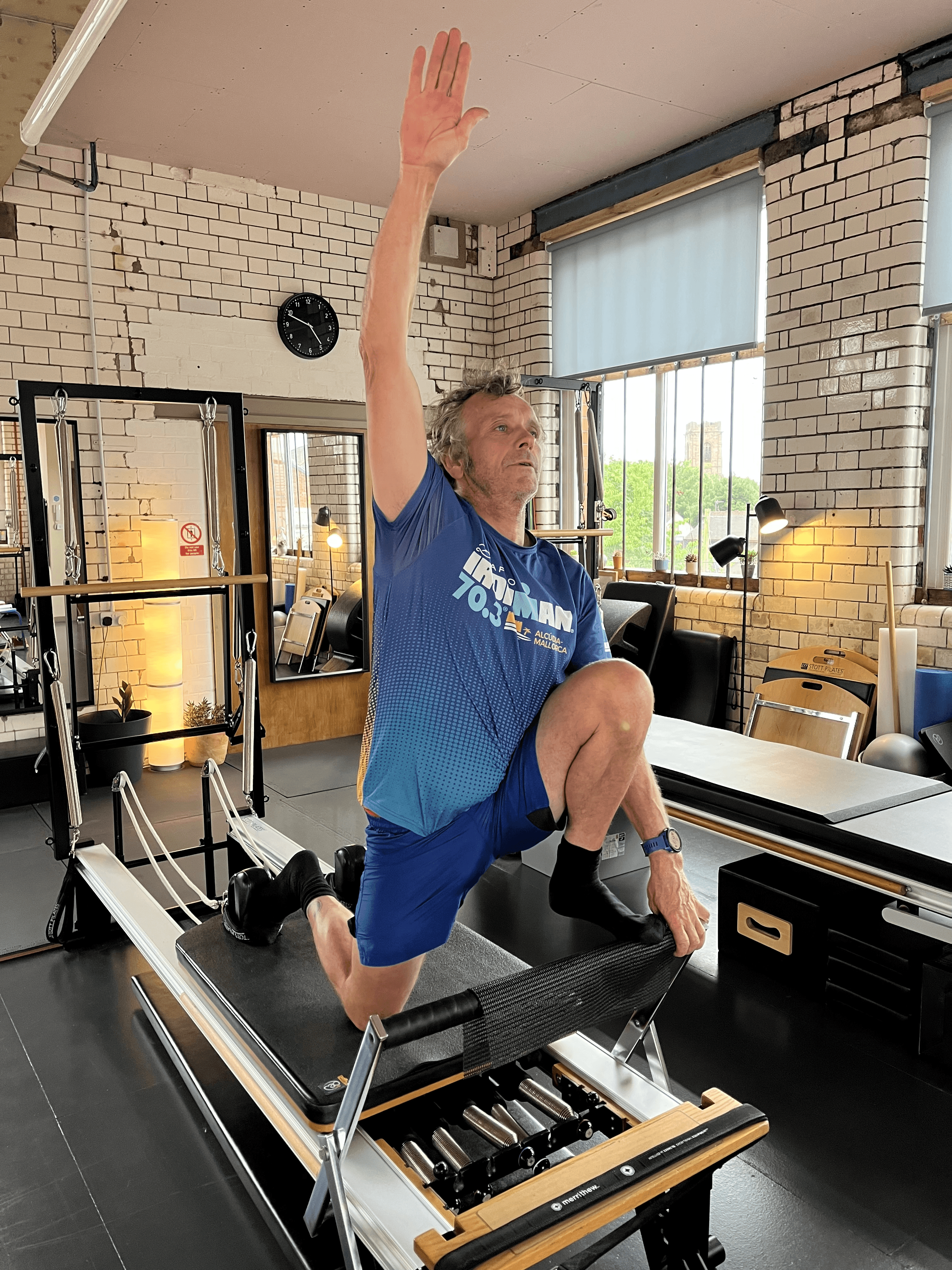
Injury Prevention
Ironman training involves high training volumes, which can increase the likelihood of repetitive strain injuries.
Pilates can help reduce the risk of common issues such as:
Lower back pain
IT band discomfort
Knee pain
Hip tightness
Shoulder overuse injuries
Neck tension
By improving movement patterns and correcting muscular imbalances, athletes are often better equipped to cope with heavy training loads.
Recovery Matters
Recovery is where your body adapts and becomes stronger.
A Pilates session on an easier training day can improve circulation, restore mobility and reduce muscle stiffness.
Rather than adding more intensity, Pilates complements your existing programme by helping your body recover effectively.
How Often Should Ironman Athletes Do Pilates?
For most athletes, one or two Pilates sessions each week can provide noticeable benefits. Our current Ironman Athletes at Pilates Space attend one session per week of either Matwork or Reformer and Equipment.
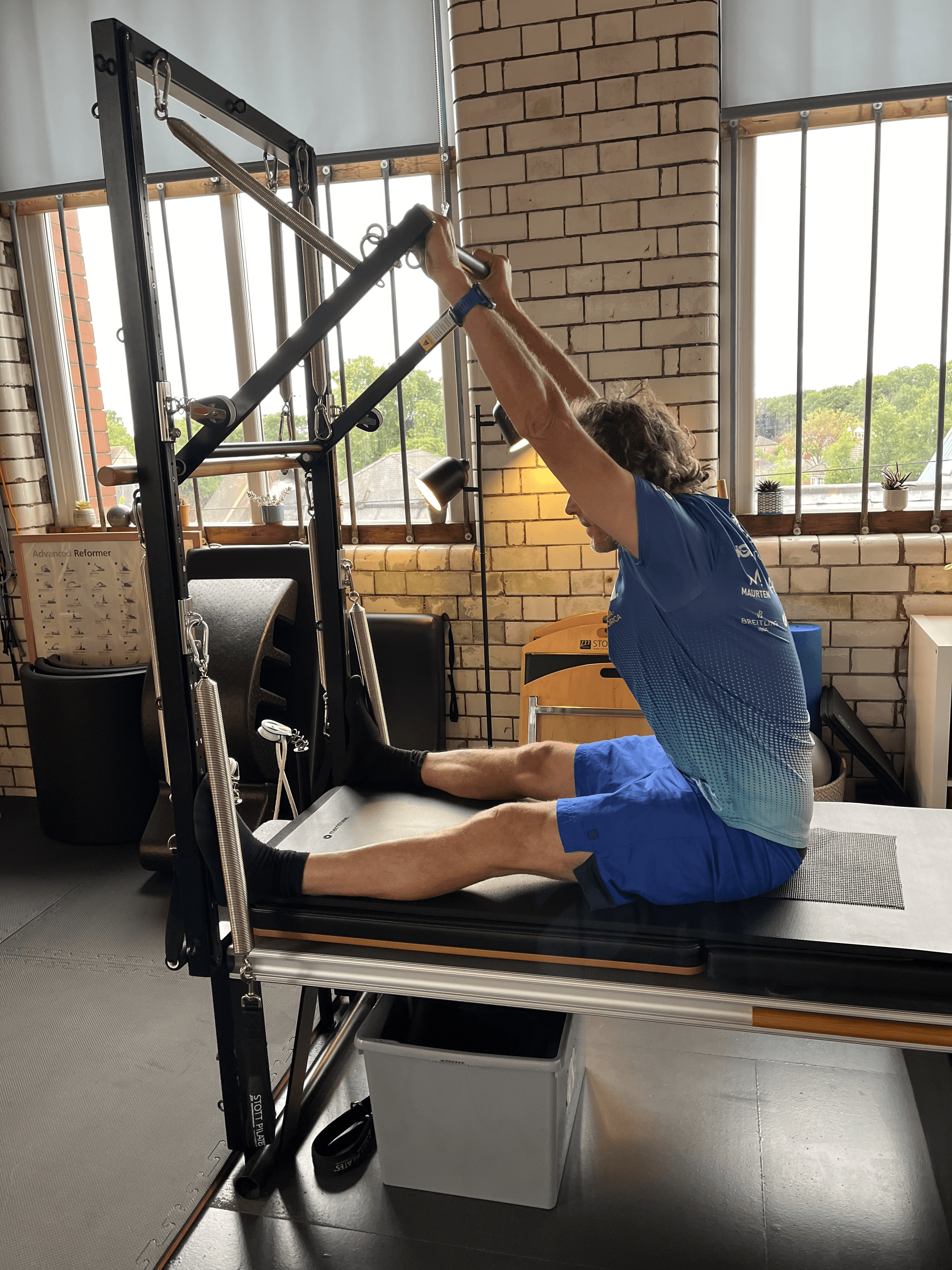
Final Thoughts
Ironman training is about more than simply covering the miles. The way you move has a significant impact on your performance, comfort and resilience.
Pilates won’t replace your swim, bike, or run session but it can help you get more from each of them. By improving strength, mobility, posture, and body awareness Pilates supports efficient movement and may help reduce the risk of injury, allowing you to train consistently and perform at your best on race day.
Lindsay holds specialist qualifications in Pilates for Running and Pilates for Cycling with APPI (The Australian Physiotherapy and Pilates Institute) and able to incorporate the most recent research into your session.
Next Steps
Private Reformer and Equipment classes are tailored specifically to your postural assessment, your biomechanics, your injuries and where you are in your training schedule. We can work alongside your triathlon coaches, sports therapists etc to ensure we are working as a team to support and enhance your training.
Matwork sessions are also an amazing way of getting an hour of Pilates into your training schedule each week. Whilst you are part of a wider group of participants the constantly varied repertoire of exercises working on all body parts will ensure you are getting all the benefits of Pilates in a regular weekly fix. Of course you will also get individual corrections and modifications as and when needed during each and every class.
Get in touch to ask any questions or to enquire about bookings
Lindsay
Lindsay@prestwichpilates.co.uk